Ancient Rome art prints
In the late 1800s, painters in Paris and Madrid turned back to the Roman arena. They studied real helmets, armour and ruins, then painted the games as if they had sat in the stands.
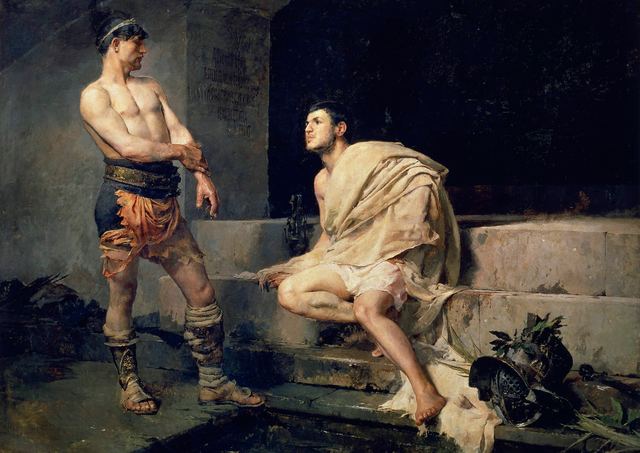
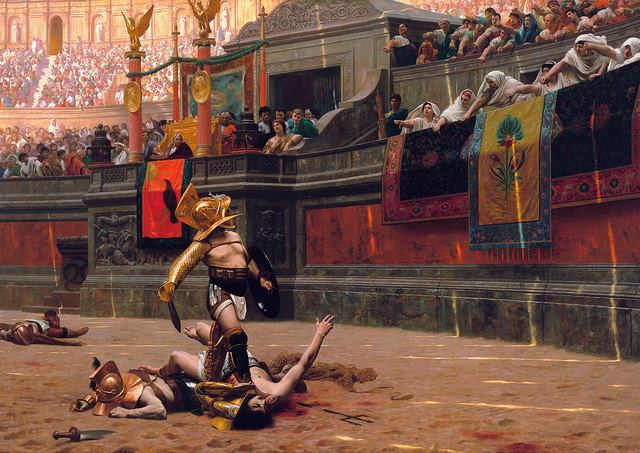
Jean-Léon Gérôme's Pollice Verso, 1872, shows the crowd turning its thumbs down. José Moreno Carbonero's Gladiators after the Combat, 1882, takes you below the arena, where the fighters rest. Two sides of the same day.
Questions about ancient rome
What does pollice verso mean?
Pollice verso is Latin for "with a turned thumb". Roman writers used it for the crowd's signal at the end of a gladiator fight. Gérôme's 1872 painting made the thumbs-down gesture famous.
Who painted gladiators?
Jean-Léon Gérôme painted the Roman arena many times in the 1850s to 1870s, including Pollice Verso. The Spanish painter José Moreno Carbonero painted Gladiators after the Combat in 1882.